Thriller Film
Childrens Film
Music Video
Plan for thriller essay.
Introduction - Grab audiences attention, thesis of hypodermic model, talk about what the essay will include.
Camerawork, how our group used this to create different meanings and angles which showed the audience how we were percieving our teenager
Main point is another teenager in the boot.
Thursday, 5 May 2011

To what extent did your media product conform or challenge genre conventions?
In our music video we are conforming to the conventions of rap music by the way the characters are dressed, for example big hoodies, hats, baggy clothes. The way we also perform and act throughout the video follows the conventions of other rap videos for example when we are playing basketball we edited it to make it seem as if we were from america.
The camera work throughout the video makes the video seem quick. There are a lot of short shots which give an upbeat vibe to the video. Also the tracking shots we decided to use are quite consistent throughout the video which is also what a lot of rap videos use. We also used low level shots as well which made harvey look like the bigger man whilst rapping.
As when we filmed it, the weather was not very good, so we decided when editing to add colour to the video so it seemed as if it was hot and sunny like you would normally find in professional rap video
In our music video we are conforming to the conventions of rap music by the way the characters are dressed, for example big hoodies, hats, baggy clothes. The way we also perform and act throughout the video follows the conventions of other rap videos for example when we are playing basketball we edited it to make it seem as if we were from america.
The camera work throughout the video makes the video seem quick. There are a lot of short shots which give an upbeat vibe to the video. Also the tracking shots we decided to use are quite consistent throughout the video which is also what a lot of rap videos use. We also used low level shots as well which made harvey look like the bigger man whilst rapping.
As when we filmed it, the weather was not very good, so we decided when editing to add colour to the video so it seemed as if it was hot and sunny like you would normally find in professional rap video
Eloise and Dom - Question 1
How can narrative theories be used to understand your media product?
We are going to use Stuart Hall's theory in relation to our Music Video. His theory is about 'Reception Theory', where the producers encode a meaning behind the product, leaving the audience to decode it themselves.
For our video, we wanted to portray youth in a different way from the majority of stereotypical television shows and films. Most forms of Media show youth as menacing, rebellious and generally a menace to society; this could be for many reasons. One being that the producers want to stir up moral panic about youth, as a lot of adults feel threatened by teenagers; the media industry saw this and decided to prod at it.
We felt that this stereotypical view of youth is incorrect and so we chose to portray our characters the opposite; each of our characters display innocence with no ill-intent to their surroundings. Steven, the first character introduced in our music video is shown doing homework/studying in school. This is often linked to hard-working individuals and doesn't show any threats.
We are going to use Stuart Hall's theory in relation to our Music Video. His theory is about 'Reception Theory', where the producers encode a meaning behind the product, leaving the audience to decode it themselves.
For our video, we wanted to portray youth in a different way from the majority of stereotypical television shows and films. Most forms of Media show youth as menacing, rebellious and generally a menace to society; this could be for many reasons. One being that the producers want to stir up moral panic about youth, as a lot of adults feel threatened by teenagers; the media industry saw this and decided to prod at it.
We felt that this stereotypical view of youth is incorrect and so we chose to portray our characters the opposite; each of our characters display innocence with no ill-intent to their surroundings. Steven, the first character introduced in our music video is shown doing homework/studying in school. This is often linked to hard-working individuals and doesn't show any threats.
Q2: To what extent did your media product conform to or challenge genre conventions?
Genre: Thriller
Common conventions used:
Common conventions used:
- The bad guy is generally masked or hidden until near the end of the film
- Use of the dark is quite conventional as fear of the dark is quite common in people and thus used quite commonly in thrillers
- Black uniform is also quite common to represent people like burglars
- Knife's and guns or generally weapons are often given the main focus of a scene in thrillers
- Silence is often used for building suspense in films
- Editing is often slow in scenes to build up tension
- Alleged bad guy killed off in the beginning
- Editing is often fast in thriller films
Practice question
Which issues or social groups did you represent in your media products?
Our music video represents gender as in the people in our video are all males. However, they are represented in a way which is not necessarily seen as typically 'masculine' as they are singing (miming) to lyrics about feelings and love etc which is not what is expected of males.
Another social group that our video represents is young people - this is shown through the mise-en-scene as our video is shot in the college - showing the ages of the individuals (students) also because they are in a college the audience would expect to see a range of different people from different social groups and this is something that we have tried to incorporate into our video by approaching different people from the college - not just our friends - to be in the video.
Our music video represents gender as in the people in our video are all males. However, they are represented in a way which is not necessarily seen as typically 'masculine' as they are singing (miming) to lyrics about feelings and love etc which is not what is expected of males.
Another social group that our video represents is young people - this is shown through the mise-en-scene as our video is shot in the college - showing the ages of the individuals (students) also because they are in a college the audience would expect to see a range of different people from different social groups and this is something that we have tried to incorporate into our video by approaching different people from the college - not just our friends - to be in the video.
Thursday, 28 April 2011
Young males have been representated in our video, we have used the same camera angle so everyone was represented as equals but we also used a different variety of people, so there was also difference in the video. The males are singing about love interests and girls, which is a representation of a typical male interest.
Thursday, 31 March 2011

Mulveys main theory is called 'the male gaze', this was to show that the female actresses in the 50s and 60s were to be looked at (to-be-looked-at-ness).
She suggests there are 2 modes of the male gaze of these era, 'voyeuristic', for example seeing women as 'whores' and 'fetishistic' seeing women as Madonnas.
The theory is to show that women were there to be seen and to entice men into the film.
The 'male gaze' theory can be applied to contemporary music videos particularly in genres such as rap and pop. Here is an example of voyeuristic tactics used to entice men into watching the candy shop video by 50 cent:
.
Female artists also use their assets, exploiting themselves. One example of this is Rihanna, from her early career she has used voyeurism to attract a certain type of audience:
Roland Barthes

Roland Barthes, born on the 12th November 1915, was a French literary theorist, a philosopher, a critic and semiotician. He was born in Cherbourg in Normandy, where he was the son of naval officer, Louis Barthes. Roland never knew his father, as he killed in battle whilst Roland was only 1 year old. When he was eleven years old, his family moved to Paris, though his attachment to his roots would remain strong throughout his life. He explored a range of theories, such as structuralism, semiotics, social theory, Marxism, anthropology and post-structuralism and influenced the development of schools with said theories.
Roland Barthes developed the idea of semiotics (the study of signs), his idea was that when a person sees a sign they will interpret it differently to someone else. He developed this theory in his paper "The Death of the Author", in this paper he explains how the author of a book is less important than the audience because the author is only responsible for putting the words in order, it is the job of the audience to give them meaning. He also explains how different signs have pluralistic meaning, for example a swastika is perceived by the western world as the symbol of the Nazis and their atrocity's, however to a Buddhist it is the sign of peace.
In 1977 he was elected chair of Semiologie Litteraire at the college of france, however his mother Henriette whom he was very close too, died at aged 80, they had lived together for 60 years. This was a serious shock to Barthes - he made his last major piece of work 'Camera Lucida'. 3 years later, after leaving a lunch party, Barthes was hit by a laundry van on the 25th of February 1980, he succumbed to his injuries and died later on 25th March aged 64.
Roland suffered from tuberculosis between 1935 - 1939, he showed great promise as a student but his physical breakdowns disrupted his academic career affecting his studies but kept him out of the military service during WW2. 1939 - 1948 he obtained license in grammar and philosophy, publishing papers and taking part in medical studies. 1928 he returned to education, gaining numerous short term positions as institutes in Egypt, Romania and France. 1952 he studied lexicology and sociology. by the 1960s Barthes established a reputation for himself, by 1967 he was writing his best known work, one of his pieces being an essay called 'The Death of the Author'.
Vladimir Propp
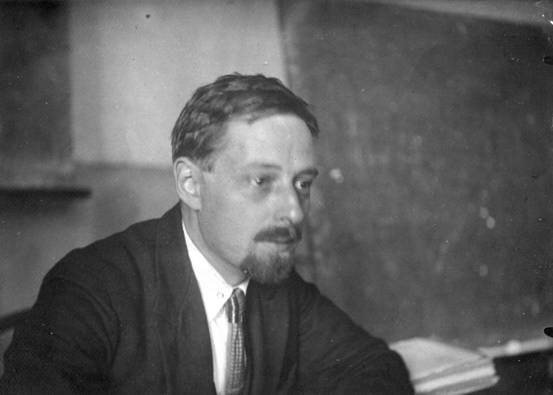
Biography
Vladimir Propp was born on April 17, 1895 in St. Petersburg to a German family. He attended St. Petersburg University (1913–1918) majoring in Russian and German philosophy. Upon graduation he taught Russian and German at a secondary school and then became a college teacher of German.
His Morphology of the Folktale was published in Russian in 1928. Although it represented a breakthrough in both folkloristics and morphology and influenced Claude Lévi-Strauss and Roland Barthes, it was generally unnoticed in the West until it was translated in the 1950s. His character types are used in media education and can be applied to almost any story, be it in literature, theatre, film, television series, games, etc.
In 1932, Propp became a member of Leningrad University (formerly St. Petersburg University) faculty. After 1938, he shifted the focus of his research from linguistics to folklore. He chaired the Department of Folklore until it became part of the Department of Russian Literature. Propp remained a faculty member until his death in 1970.
Theory:
believes that fairy tales are constructed using certain plot elements such as: pursuit, punishment etc... which consistently occur in a uniform sequence after studying 100 fairy tales he produced 31 generic functions.
He also believed that there are character types in media, such as villain, dispatcher (sends the hero), helper, princess/prize, her father, donor, hero, false hero which appear in any story based media, e.g. film, tv series, video game, song, literature...
Theory:
believes that fairy tales are constructed using certain plot elements such as: pursuit, punishment etc... which consistently occur in a uniform sequence after studying 100 fairy tales he produced 31 generic functions.
He also believed that there are character types in media, such as villain, dispatcher (sends the hero), helper, princess/prize, her father, donor, hero, false hero which appear in any story based media, e.g. film, tv series, video game, song, literature...
Villain: Darth Vader
Princess/prize: Leia
Hero: Luke Skywalker
Donor/ dispatcher: Obi wan.
False hero: Han Solo.
David Gauntlett

David Gauntlett was born on the 15th of March 197, he is a British sociologist and media theorist. He specialises in the study of contemporary media audiences, the everyday making and sharing of digital media, and the role of such media in self-identity and self-expression
Theory:
Fragmented construction; how the consumption of different media texts changes the way we identify ourselves.
- Traditional views of men and women are no longer there e.g traditional view of women as housewife/low status worker has been kicked out by a feisty successful 'girl power' icons. The usual masculine ideas of toughness, stubborn self reliance and emotional silence have been taken over by a new emphasis on mens emotions, need for advice and problems of masculinity.
-Construction of identity has become a known requirement.
Here is an example of the traditional views of gender changing, Tomb Raider is a film which you would expect to have a male lead role however this action film centrals around a female which is unusual for this genre of film.
Monday, 28 March 2011
Fern and Olivia
Thriller video blog
http://10thriller10.blogspot.com/
Music video blog
http://14longroadmusicvideo10.blogspot.com/
Children's video blog
http://10thriller10.blogspot.com/
Music video blog
http://14longroadmusicvideo10.blogspot.com/
Children's video blog
James, Ryan, Andrew & Joe, Featuring Josh and Dom - Video Posts
Music Video.
Thriller Opening
Children's Film opening.
Thriller Opening
Children's Film opening.
Subscribe to:
Posts (Atom)