Thursday, 31 March 2011

Laura Mulvey is a British feminist film theorist born on august 15th 1941. She was educated at st Hilda's college, Oxford. She is currently a professor of film and media studies at Birkbeck University of London, but has previous experience working for the British film institute.


 Mulveys main theory is called 'the male gaze', this was to show that the female actresses in the 50s and 60s were to be looked at (to-be-looked-at-ness).
She suggests there are 2 modes of the male gaze of these era, 'voyeuristic', for example seeing women as 'whores' and 'fetishistic' seeing women as Madonnas. 
The theory is to show that women were there to be seen and to entice men into the film.

The 'male gaze' theory can be applied to contemporary music videos particularly in genres such as rap and pop. Here is an example of voyeuristic tactics used to entice men into watching the candy shop video by 50 cent:


.


Female artists also use their assets, exploiting themselves. One example of this is Rihanna, from her early career she has used voyeurism to attract a certain type of audience:


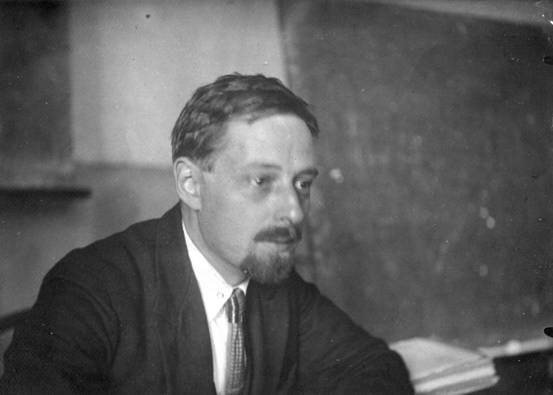


Roland Barthes


Roland Barthes, born on the 12th November 1915, was a French literary theorist, a philosopher, a critic and semiotician. He was born in Cherbourg in Normandy, where he was the son of naval officer, Louis Barthes. Roland never knew his father, as he killed in battle whilst Roland was only 1 year old. When he was eleven years old, his family moved to Paris, though his attachment to his roots would remain strong throughout his life. He explored a range of theories, such as structuralism, semiotics, social theory, Marxism, anthropology and post-structuralism and influenced the development of schools with said theories.


Roland Barthes developed the idea of semiotics (the study of signs), his idea was that when a person sees a sign they will interpret it differently to someone else. He developed this theory in his paper "The Death of the Author", in this paper he explains how the author of a book is less important than the audience because the author is only responsible for putting the words in order, it is the job of the audience to give them meaning. He also explains how different signs have pluralistic meaning, for example a swastika is perceived by the western world as the symbol of the Nazis and their atrocity's, however to a Buddhist it is the sign of peace.


In  1977 he was elected chair of Semiologie Litteraire at the college of france, however his mother Henriette whom he was very close too, died at aged 80, they had lived together for 60 years. This was a serious shock to Barthes - he made his last major piece of work 'Camera Lucida'. 3 years later, after leaving a lunch party, Barthes was hit by a laundry van on the 25th of February 1980, he succumbed to his injuries and died later on 25th March aged 64.


Roland suffered from tuberculosis between 1935 - 1939, he showed great promise as a student but his physical breakdowns disrupted his academic career affecting his studies but kept him out of the military service during WW2. 1939 - 1948 he obtained license in grammar and philosophy, publishing papers and taking part in medical studies. 1928 he returned to education, gaining numerous short term positions as institutes in Egypt, Romania and France. 1952 he studied lexicology and sociology. by the 1960s Barthes established a reputation for himself, by 1967 he was writing his best known work, one of his pieces being an essay called 'The Death of the Author'.

Vladimir Propp


Biography

Vladimir Propp was born on April 17, 1895 in St. Petersburg to a German family. He attended St. Petersburg University (1913–1918) majoring in Russian and German philosophy. Upon graduation he taught Russian and German at a secondary school and then became a college teacher of German.
His Morphology of the Folktale was published in Russian in 1928. Although it represented a breakthrough in both folkloristics and morphology and influenced Claude Lévi-Strauss and Roland Barthes, it was generally unnoticed in the West until it was translated in the 1950s. His character types are used in media education and can be applied to almost any story, be it in literature, theatre, film, television series, games, etc.
In 1932, Propp became a member of Leningrad University (formerly St. Petersburg University) faculty. After 1938, he shifted the focus of his research from linguistics to folklore. He chaired the Department of Folklore until it became part of the Department of Russian Literature. Propp remained a faculty member until his death in 1970.

Theory:
believes that fairy tales are constructed using certain plot elements such as: pursuit, punishment etc... which consistently occur in a uniform sequence after studying 100 fairy tales he produced 31 generic functions.
He also believed that there are character types in media, such as villain, dispatcher (sends the hero), helper, princess/prize,  her father, donor, hero, false hero which appear in any story based media, e.g. film, tv series, video game, song, literature...


Villain: Darth Vader
Princess/prize: Leia
Hero: Luke Skywalker
Donor/ dispatcher: Obi wan.
False hero: Han Solo.

David Gauntlett


David Gauntlett was born on the 15th of March 197, he is a British sociologist and media theorist. He specialises in the study of contemporary media audiences, the everyday making and sharing of digital media, and the role of such media in self-identity and self-expression

Theory:
Fragmented construction; how the consumption of different media texts changes the way we identify ourselves.
- Traditional views of men and women are no longer there e.g traditional view of women as housewife/low status worker has been kicked out by a feisty successful 'girl power' icons. The usual masculine ideas of toughness, stubborn self reliance and emotional silence have been taken over by a new emphasis on mens emotions, need for advice and problems of masculinity.
-Construction of identity has become a known requirement.

Here is an example of the traditional views of gender changing, Tomb Raider is a film which you would expect to have a male lead role however this action film centrals around a female which is unusual for this genre of film.